POSITIVE THINKING THERAPY
What if trying harder to sleep is actually keeping you awake?
Sleep Hypnotherapy
You go to bed tired.
But the moment your head hits the pillow, something changes.
Your body may be ready for sleep, but your mind suddenly seems to have other plans. Thoughts appear. Conversations replay. Tomorrow starts being rehearsed before today has even finished.
And the harder you try to switch off, the more awake you seem to become.
Because sleep isn't something you can force.
Sometimes the problem isn't how tired you are.
It's what your mind has learned to do when it's time to sleep.
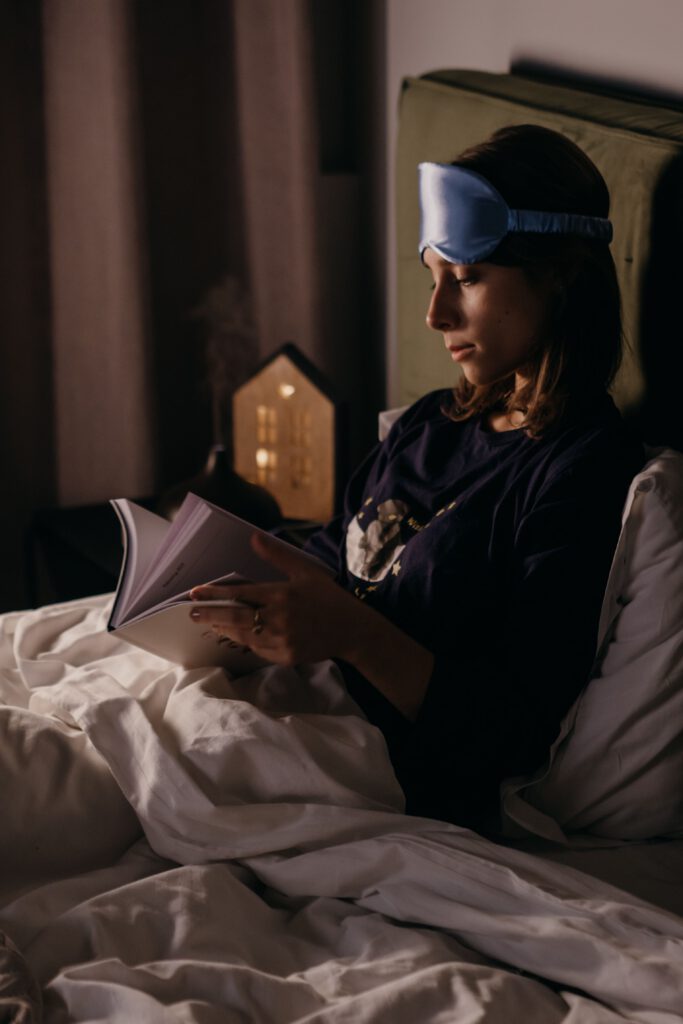
You've probably already tried to fix your sleep.
Maybe you've gone to bed earlier, changed your pillow, cut back on caffeine or put the phone away.
Perhaps you've tried meditation, sleep apps, white noise, breathing exercises or one of the countless routines we're told should help us sleep.
And some of it may have helped.
But you're still reading this.
Which raises an interesting question.
What if the problem isn't that you don't know enough about sleep?
What if your mind has simply learned to stay awake?
Your bedroom can become a trigger without you realising it.
Think about what happens after enough difficult nights.
You look at the clock.
You calculate how many hours are left.
Then you calculate them again.
You start wondering how you'll function tomorrow if you don't fall asleep soon.
And now something strange has happened.
The place where you're supposed to relax has become the place where you try to relax.
That's an important difference.
Because trying creates effort. Effort creates attention. And attention keeps you engaged with the very thing you're desperately trying to stop thinking about.
Eventually, simply getting into bed can become associated with anticipation:
Will I sleep tonight?
That expectation can become part of the pattern.

And sometimes falling asleep isn't the problem.
Perhaps you fall asleep reasonably quickly.
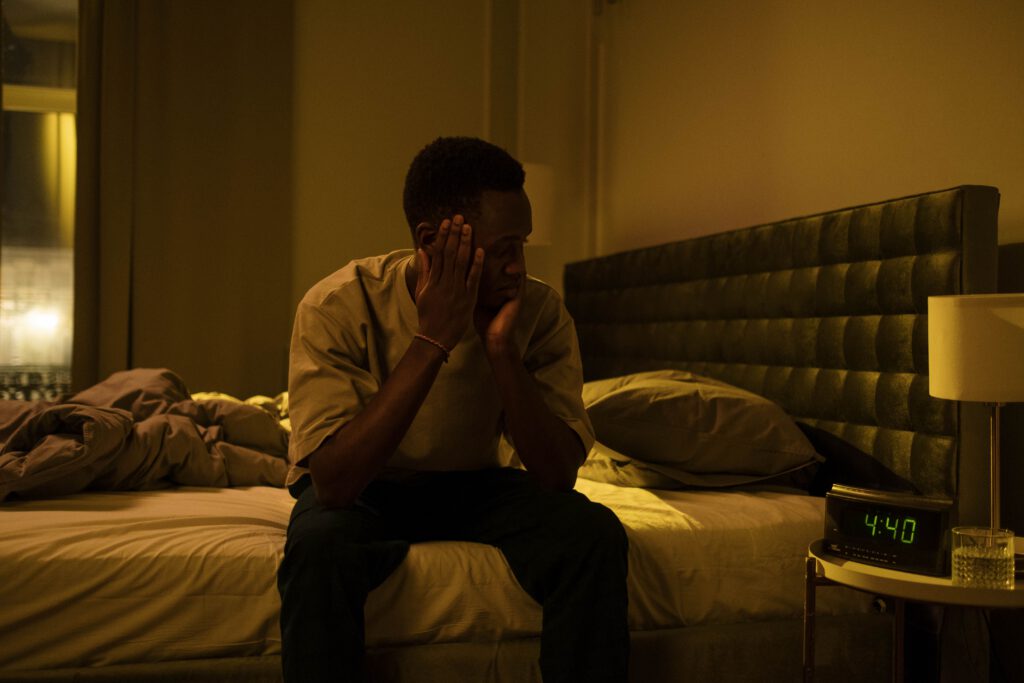
Then it's 2:17am.
Or 4:40am.
Your eyes open and your mind switches on.
At first there's nothing particularly wrong.
Then comes the thought:
"Not again."
And suddenly you're checking the time, calculating what's left of the night and wondering whether you'll be exhausted tomorrow.
Other people experience something different again — waking too early and being unable to return to sleep.
The details vary.
But underneath them there can be something remarkably similar:
your mind has become very good at being awake when you want it to switch off.
This is where hypnotherapy takes a different approach.
You already know how to sleep.
You don't need to consciously remember how to slow your breathing, relax your muscles or move through the natural stages of sleep.
Your mind and body already know how to do those things.
The difficulty can arise when patterns of thought, expectation or emotional arousal start getting in the way of something that was once automatic.
Hypnotherapy works with those subconscious patterns rather than simply giving your conscious mind another list of things to remember at bedtime.
The aim is to help change the associations surrounding sleep — so bedtime can begin to feel less like a nightly test you have to pass and more like what it was always supposed to be:
the end of the day.

Imagine not having to think so much about sleep.
This may be the part people underestimate.
Poor sleep doesn't always stay in the bedroom.
It can follow you into the morning.
You wake up already thinking about how badly you slept. You wonder whether you'll have enough energy for work, whether you'll be irritable later or whether you'll need caffeine just to get through the afternoon.
Then evening arrives.
And somewhere in the back of your mind, tomorrow night's sleep is already becoming a concern.
Imagine that cycle beginning to lose its grip.
Going to bed without immediately checking whether you're sleepy enough.
Waking briefly without assuming the night is ruined.
And perhaps most importantly, not spending your day worrying about what will happen when you go to bed that night.
Sometimes the real freedom isn't simply more sleep.
It's thinking about sleep less.

You don't need to decide anything today.
If you've been struggling with sleep, you may simply want to understand whether hypnotherapy could be appropriate for you.
That's exactly what the free 20-minute consultation is for.
There's no need to commit to treatment before we speak.
We can talk about what's happening, how long it's been happening, what you've already tried and the patterns you've noticed around your sleep.
Then we can discuss whether hypnotherapy may be a suitable next step.
You don't have to solve your sleep tonight.
But you can start looking at it differently today.
Book Your Free 20-Minute ConsultationFree 20-minute consultation • Melbourne & online
Questions
Frequently Asked Questions
Can hypnotherapy help if my mind won’t switch off at night?
It may be helpful where bedtime has become associated with thinking, worrying, anticipating or trying too hard to sleep. Hypnotherapy can be used to work with the learned thoughts and responses that may be keeping the mind alert when you would rather be winding down. Your individual sleep pattern can be discussed during the free consultation.
What if I can fall asleep but keep waking during the night?
Difficulty staying asleep can have many causes. Where psychological patterns such as stress, anticipatory thinking or learned sleep anxiety appear to be contributing, hypnotherapy may form part of an appropriate approach. Persistent or unexplained sleep disturbance should also be discussed with a qualified healthcare professional so that medical causes can be considered.
Will hypnotherapy make me fall asleep during the session?
Not necessarily. Hypnosis is a focused and relaxed state rather than ordinary sleep. Most people remain aware of what is happening and can hear and respond throughout the session.
What if I’ve had sleep problems for years?
A long-standing pattern can begin to feel permanent because your mind and body have repeated it so many times. That does not automatically mean the response cannot change. We would first look at how your particular sleep difficulty operates, what appears to maintain it and whether hypnotherapy is an appropriate option.
How many sessions will I need for sleep?
There is no single number that applies to everyone. It depends on the type of sleep difficulty, how long it has been occurring and the factors that appear to be maintaining it. We can discuss a suitable approach once I understand more about your situation.
Can sleep hypnotherapy be done online?
Yes. Where appropriate, sleep hypnotherapy sessions can be provided online as well as in Melbourne.
Free 20-Minute Consultation
Perhaps it's time to stop fighting with sleep.
You've probably spent enough nights trying to make sleep happen.
Maybe the next step isn't trying harder.
Maybe it's understanding what has been keeping the pattern going.
Start with a conversation.
Positive Thinking Therapy — Melbourne & Online